
Supplemental Care in Assisted Living Across Arizona
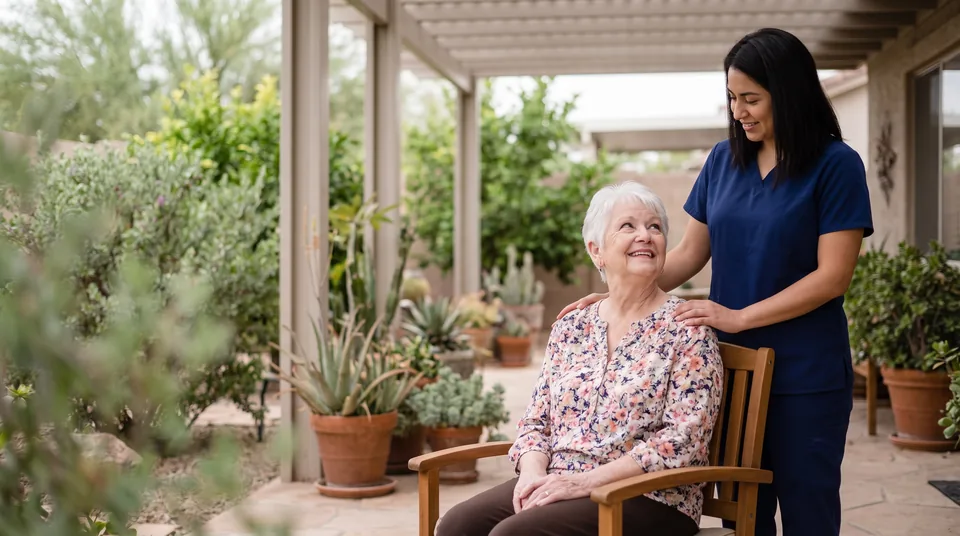
Supplemental care is one-on-one time from a Meridian Home Care caregiver for someone who lives in an assisted living or memory care community. The community keeps doing what it's there to do. We add a person who is there only for your family member, for the hours you choose, from the Phoenix metro down to Tucson.
What Supplemental Care Adds to Assisted Living
A community's caregivers look after a whole hallway or building at once. Meals come at set times, showers fall on set days, and help arrives when a caregiver is free. That works for a lot of residents. For others, the hours between those moments are long, quiet, or harder than they look from the outside.
Our caregiver fills those hours. It might be a slow walk around the courtyard before the afternoon heat, a shower that isn't hurried, or company at lunch so the meal actually gets eaten. It can be smaller things too: reading the mail out loud, sorting a closet that has gotten away from them, setting up a video call with the grandkids, or a ride to an appointment and the pharmacy afterward.
Some families want a few mornings a week. Others want someone there every evening, or overnight for a while. The schedule is yours to set, and it can change as needs do.
How Arizona Licenses Assisted Living Homes and Centers
Arizona state law sorts assisted living by size. An assisted living home has ten or fewer residents, and an assisted living center has eleven or more. The Arizona Department of Health Services counted 1,479 of them in Maricopa County in mid-2024, and 1,273 of those were homes, so much of the Valley's assisted living happens in a house on a residential street.
The same law describes three levels of service a facility can offer: supervisory care, personal care and directed care. Directed care is the level for people who can't recognize danger, call for help or make basic care decisions on their own, which is where memory care sits.
Whichever kind of community your family member lives in, our caregiver works alongside its staff, never in place of them.
One-on-One Time in Memory Care
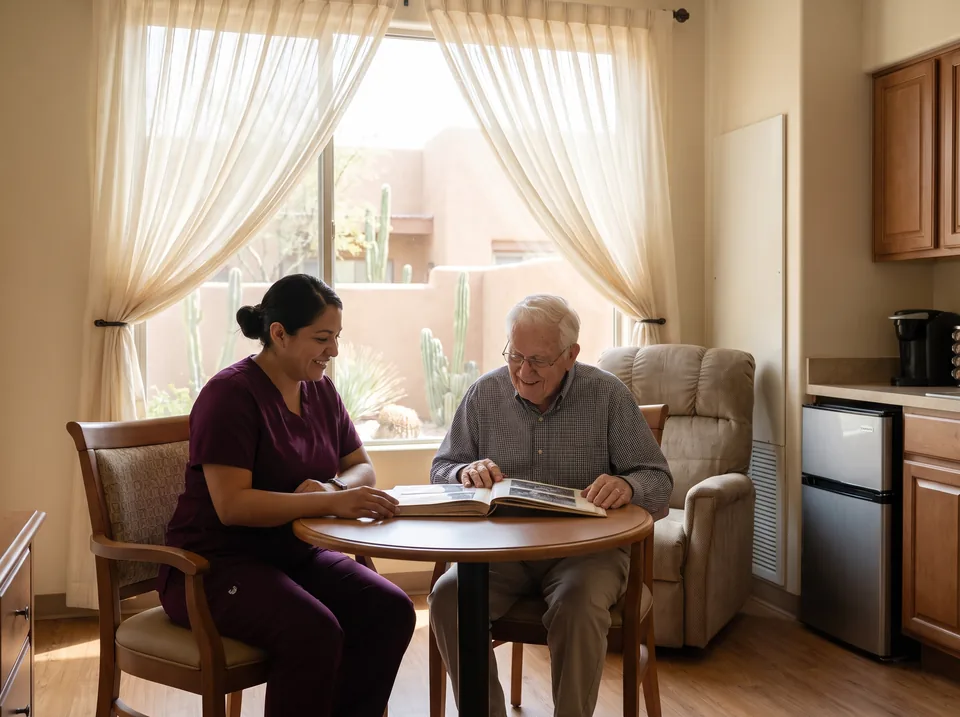
Memory care keeps people safe, but a busy unit can't always give one person the same face and the same pace every day. Supplemental care can. The same caregiver comes at the same time, learns which music settles them, and knows that a walk works better than a talk on a restless afternoon.
We help at mealtimes, keep a hand close on the walk to the activity room, and sit through the late-day restlessness that so many families know. When something changes, a new bruise or a meal skipped twice, we tell the community's staff and the family. Our dementia home care page has more on how we keep a day calm and familiar.
Extra Hours After a Hospital Stay or Near the End of Life
Coming back to the community after a hospital stay or surgery is a common time to add hours. A resident may need a hand with every transfer for a week or two, more than the community's routine allows. We can cover that stretch and step back as strength returns, the same way our post-op and hospital recovery care works at home.
When a hospice team is caring for a resident, families often want someone sitting with them between visits. We do that quietly, beside the hospice nurses and the community's staff. Our hospice caregiver support page explains that kind of help.
Working Hand in Hand With the Community's Staff
Each community sets its own rules for outside caregivers, so we start there. Before the first visit, we talk with the community about sign-in, visiting hours, and which tasks its own staff keep. We follow those rules, and we learn the resident's service plan so we're helping with the same goals.
Medication help, nursing care and anything clinical stay with the community and the resident's doctors. Our caregiver handles the personal, practical and social side, and reports what we see. The community's caregivers usually welcome another set of eyes on someone they care about too.
Peace of Mind for Families Who Live Far Away
A lot of the families who ask about supplemental care don't live nearby. Maybe your family member moved into a community in Sun City while you're in another state, or you're in Phoenix and they're in Tucson. Our caregiver can be your eyes on the visits you can't make, and we keep you up to date on how the days are going.
For company and outings on their own, our companion care page covers what a visit can include.
What Shapes the Cost of Supplemental Care
The number of hours per visit and the number of visits each week matter most. Evenings and overnights add to that. So does the kind of help: sitting with someone through the afternoon is different from helping with every transfer after a fall. We go over the hours and the cost together on the call, before anything starts.
Supplemental Care Around the Valley and in Tucson
We come out to assisted living and memory care communities across the Valley, from Mesa and Scottsdale to Sun City and Sun City West, and down to Tucson. Our service areas page lists each town, and the home care services page covers the rest of what we do.
Questions
Frequently Asked Questions
Will the assisted living community allow an outside caregiver?
Each community sets its own rules, so we check with the community before the first visit. Then we follow its sign-in, hours and other policies.
Does supplemental care replace what the community provides?
No. The community's staff keep doing their job, including medication help. We add one-on-one hours for your family member on top of that.
Can you visit someone in memory care?
Yes. Memory care residents often do best with the same caregiver at the same time of day, and we plan the schedule around that.
Can we start with a few hours and add more later?
Yes. Many families start small, then add hours after a hospital stay or when the afternoons get harder.
Find the right help
Talk With Us About Care in Assisted Living
Any hour, any day(602) 200-4819Tell us which community your family member lives in, what a usual day looks like there, and where they could use more time and attention. Call (602) 200-4819, and we'll talk it through and contact the community with you.
Step 1 of 2
Who is the care for?