

Dementia Home Care in Gilbert, AZ
Dementia home care lets a person with memory loss stay in the house they know, with a caregiver who keeps the day calm and safe. Meridian Home Care helps families in Gilbert and across the East Valley who are caring for someone they love with dementia or Alzheimer's. The help is non-medical, and it happens at home.
Memory Care at Home Starts With the Familiar
A house holds a lot of memory. Your loved one knows where their chair is, which cupboard the mugs live in, and how the light comes through the kitchen window in the morning. Memory care at home keeps all of that in place. The caregiver comes to them, so they don't have to learn a new place.
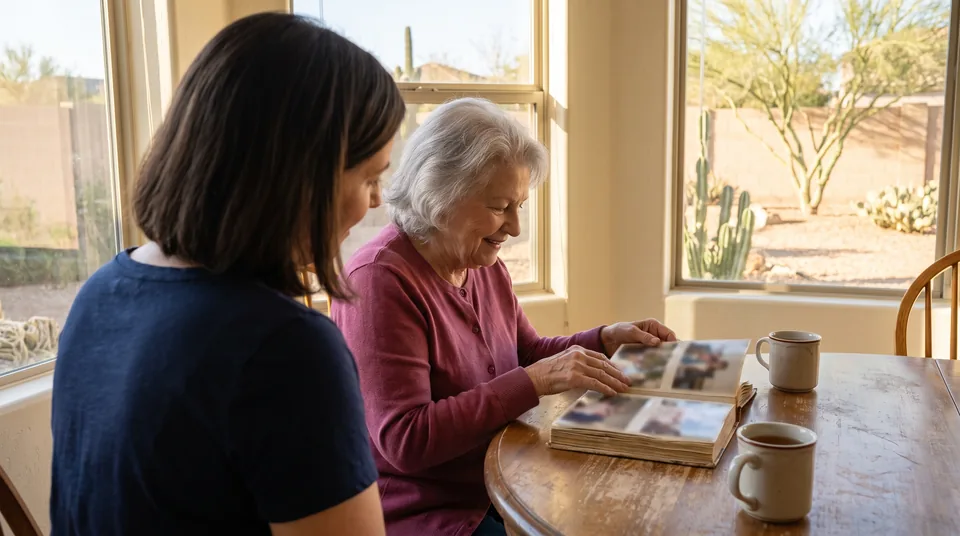
We start by learning the house the way they know it. You tell us they take their coffee with two sugars and call the dog by the name of a dog from years ago. You mention that the photo album on the side table settles them when they're restless. The kettle, the radio station, the order they like to get dressed in: small things like these are what make a day go well. A caregiver who follows those habits is working with the person, not against them.
Dementia Home Care Through a Calm, Steady Day
Routine does a lot of the work. A good day has a shape: up at the same time, clothes laid out in the order they go on, breakfast in the same seat. After breakfast comes a short walk around the block, early in summer before the heat climbs past 110. Then something useful for their hands, like folding towels or sorting the silverware drawer, and lunch at the usual hour.
The caregiver keeps reminders gentle. Medication reminders come at the same time each day, with the pill organizer on the counter. Meals and water come often, since staying hydrated matters in an Arizona summer. Rest comes when they're tired, not when the clock says so. As the afternoon goes on, the house gets quieter.
Anything medical stays with their doctors: the diagnosis, the medicines, and any change in how they're doing. We handle the everyday help around it. If we notice something new, like more confusion than usual or a change in appetite, we'll let you know. Then you can bring it up at the next appointment.
When Late Afternoon Brings Restlessness
For many people with dementia, late afternoon is the hardest stretch of the day. As the light fades, some get restless, anxious or more confused. Families often hear this called sundowning. The caregiver plans for it.
The lamps go on before the room gets dim. The blinds come down against the low western sun. Familiar music plays quietly, the news goes off, and there's a snack and a glass of water. A simple task, like matching socks or turning the pages of the photo albums together, gives restless hands something to do.
If the person at home wants to "go home" while sitting in their own living room, the caregiver doesn't argue. Instead, the caregiver talks with them about home, walks through the house with them, and waits for the moment to pass. If the late afternoons change or get harder, that's worth raising with the doctor.
Patience With the Same Question, Asked Again
People with memory loss often ask the same question many times in an hour. What time is lunch? Is it Sunday? Where are my keys? The caregiver answers each one kindly, like it's the first time. They don't correct, quiz or say "I already told you." Sometimes the kindest answer is a change of scene. A walk to the patio to check the plants or a cup of tea at the table can do it.
That patience is a big part of good dementia care. It also takes a load off the family member who's been answering the same questions all day.
Bathing When It Feels Frightening
For someone with dementia, a shower can feel cold, loud and confusing. Bathing is often one of the hardest parts of the week at home. The caregiver slows it down.
The bathroom gets warm first. A towel goes over the shoulders. The shower chair and grab bar are in place, and the handheld sprayer starts at the feet. The caregiver explains each step before it happens and keeps the person covered as much as possible. If today isn't the day, a wash at the sink works fine, and the caregiver tries again tomorrow at whatever hour your family member is usually calmest. Bathing, toileting and changing briefs are part of our personal care help, and they're part of dementia home care whenever they're needed.
Wandering and Keeping the House Safe After Dark
Nights bring their own risks. A person with dementia may wake at 3 a.m. thinking it's morning, get dressed and head for the front door. In the dark, a loose rug or the step down to the family room can turn into a fall.
At night, the house gets set up for safety. There's a night light in the hallway, a clear path to the bathroom and the walker by the bed. The doors stay locked the way your family already locks them. An overnight caregiver stays up through those hours, walks alongside if the person is awake, and guides them back to bed. During the day, the caregiver keeps an eye on the doors, and walks happen together. In a Valley summer, an unplanned walk in 110-degree heat is dangerous, so nobody heads out alone. Our 24-hour home care page explains overnight and round-the-clock options.
Alzheimer's Home Care and Support for the Family Caregiver
Often the person doing the most caregiving lives under the same roof. The two of them may have shared that house for a long time, and now one is up at night, answering the same questions and handling every meal. Alzheimer's home care is as much for that family caregiver as for the person with the diagnosis.
Having one of our caregivers in the house gives that person time back. That might mean a few hours for their own doctor's appointment, a round of golf or lunch with friends. It might mean a full night's sleep while someone else stays up. Our respite care page explains how breaks like that work. Relatives who live out of state can stay in the loop, too, since we coordinate with the family and keep everyone informed.
What Changes the Cost of Dementia Care at Home
Cost depends on the hours and the help. A few afternoons a week of company and routine is a different plan from daily help with bathing and meals. Nights change it, especially when your loved one is up and needs someone awake. Dementia also changes over time, so the plan may start small and grow as needs increase.
We work out the details on the call. Tell us about a normal day and a hard one, and we'll talk through a schedule and what it would cost.
Dementia Care Visits in Gilbert, Mesa, Chandler and Beyond
Meridian Home Care comes to homes in Gilbert and across the East Valley. That includes Mesa, Chandler, Queen Creek, Sun Lakes and Tempe. We also come out to Scottsdale, Phoenix and the West Valley, and we set schedules ahead for those visits. The full list of towns is on our service areas page.
If the person you care for mainly needs company, errands and a ride to the store, companion care may be enough for now. Every kind of help we offer is on our home care services page.
Questions
Frequently Asked Questions
How is dementia home care different from moving to memory care?
We come to the home. The person with dementia stays in their own rooms with their own things, and a caregiver comes to them for the hours you choose. The kitchen, the routines and the neighborhood all stay the same.
What if the person I'm caring for refuses help or gets upset with the caregiver?
That can happen, especially at first. The caregiver backs off, tries again later, and tries a different way in, like coffee first and the shower after. Tell us what's worked for you, and we'll start there.
Do you help with Alzheimer's and other types of dementia?
Yes. The everyday help looks much the same: steady routines, meals, help with bathing, company and safety at night. We plan it around how memory loss shows up in your loved one's day.
Can someone stay overnight if my family member is up at night?
Yes. An overnight caregiver can stay with them, help them to the bathroom and guide them back to bed. That way, the rest of the house can sleep.
Find the right help
A Calmer Day at Home Starts With a Conversation
Any hour, any day(602) 200-4819Tell us about the good days and the hard ones for someone you love, and we'll talk through what would help at home. Reach us at (602) 200-4819 to set up a care consultation.
Step 1 of 2
Who is the care for?