

Chronic Condition Support in Gilbert, AZ
Chronic condition support at home from Meridian Home Care is steady, everyday help for people living with a long-term health condition. Parkinson's, COPD, heart failure, diabetes, arthritis and life after a stroke can each make ordinary days harder. We help with those days in homes across Gilbert and the Valley, so the person you care for has a hand right where it's needed.
Chronic Condition Support at Home Starts With a Steady Routine
Most days run smoother on a routine. Your loved one gets up at the same time, has breakfast before the morning pills and rests after lunch. Errands happen in the cool early hours, before the afternoon heat. We help keep that rhythm. A caregiver might come in the morning to help with the shower and getting dressed, make breakfast, and walk out to the mailbox together. Another family might want us in the late afternoon, when energy runs low and dinner still needs making.
Good days and harder days both happen. On a good day, we might head to the library, the grocery store or a family get-together. On a harder day, we slow down, skip the outing and keep things easy at home. The routine bends, and we bend with it.
Meals That Follow the Doctor's Plan
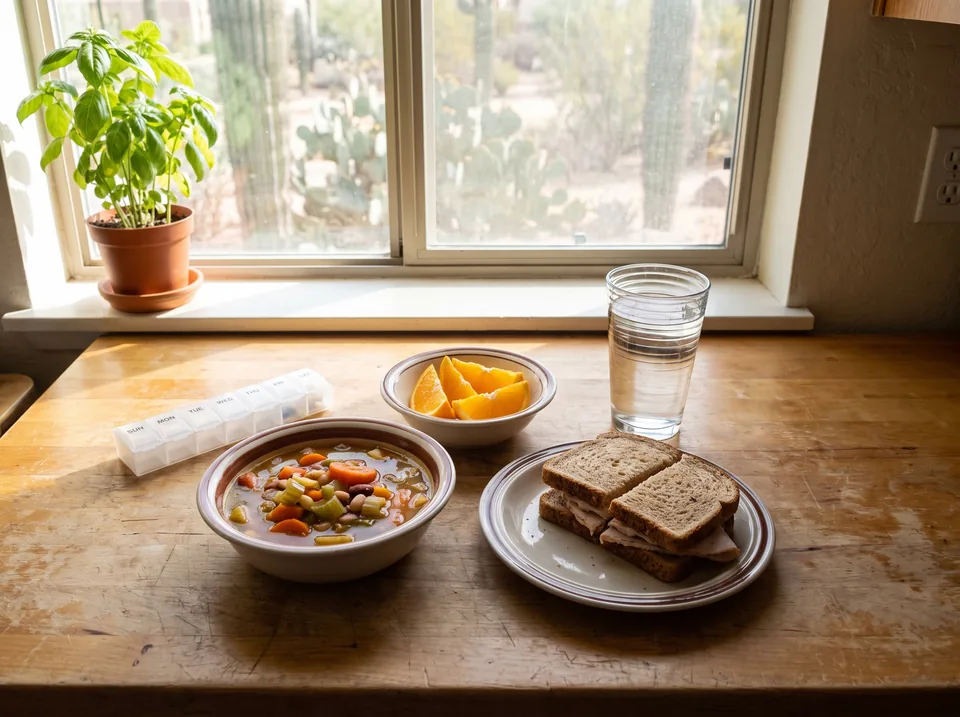
Many long-term conditions come with food guidance from a doctor or dietitian. When there's a plan, we shop and cook to it. If the list says low salt, we pass on the salty canned soup and season with herbs and lemon. If it says smaller portions or no sugary drinks, that's how we set the table. The plan itself comes from the doctor, and we follow it at the store and the stove.
We help write the grocery list, do the shopping, and cook simple meals that are easy to chew and easy to reheat. We follow the doctor's guidance on fluids too, which matters in an Arizona summer when it's over 110 degrees outside. For stiff, sore hands, we open the jars and cut the meat. Our page on meals, laundry and housekeeping covers the kitchen and the rest of the house.
Moving Safely Through the House
Getting around the house is often where a long-term condition shows up first. For families looking into Parkinson's care, a lot of our help comes down to time and a steady arm. Buttons take longer, and turning around in a narrow bathroom takes care. We give the extra minutes, walk alongside and keep the walker close.
Stroke recovery at home can mean a weak grip, or a leg that drags on the walk to the car. We help with what's harder now: getting dressed, cutting food, the step into the shower. With COPD or heart failure, a shower can wear a person out. We set out the shower chair and leave time to sit and rest before getting dressed.
We also look for the things that cause falls. Loose rugs, cords across the hallway and a dark path to the bathroom at night are common ones. A night light and a clear path go a long way. Our personal care page covers bathing, dressing and transfers in more detail.
Reminders, Rides and a Full Appointment Calendar
A long-term condition often comes with a crowded calendar: the family doctor, the specialists, the lab and the pharmacy. We keep the dates on the kitchen calendar and remind your family member of each one. Medication reminders follow the times on their list, so they hear about each dose when it's due.
On appointment days, we drive. We help with getting into the car, walk into the office together and wait until the visit is done. On the way home, we stop for the refill and the groceries. Rides and errands are a big part of companion care as well.
Company on the Long Days at Home
A long-term condition can make a person's world smaller. There are fewer drives, fewer visits and more hours in the same chair. A caregiver brings some of that world back in. We play cards, work the crossword, or watch the ballgame and talk about it. Some mornings, it's a slow lap around the block before the heat sets in.
Company also gives the relative who does most of the caregiving a real break. Our respite care page has more on that. If memory changes are part of the picture, our dementia home care page covers that kind of help.
Where the Doctor's Care Ends and Ours Begins
The medical side of a chronic condition stays with the doctors, nurses and therapists: the diagnosis, the treatment and any change to medications. We handle the everyday help around it.
Chronic illness care at home works well when everyone knows their part. Sometimes the person we're helping seems off from their usual: slower on the walk, or not interested in lunch. When that happens, we tell the family so they can call the doctor. We keep the family informed and plan our visits around the appointments already on the calendar.
What Moves the Cost of Ongoing Support
A chronic condition usually means help over months or years, so the plan needs to work for the long run. Hours per week matter most. Overnight help, or someone there around the clock, adds to that. How much hands-on help is needed counts too. Reminders, meals and rides take less of a caregiver's time than help with every transfer and every shower.
Needs often change with a long-term condition, and the hours can change with them. The call is where we work it out, looking at a normal week for your loved one and the parts that need a hand.
Ongoing Help in Gilbert and Across the Valley
We help families in Gilbert, Chandler, Sun Lakes and Mesa. We also come out to the West Valley, to towns like Peoria and Surprise, and we set those schedules ahead. If the person who needs care is a snowbird who spends winters here, help can follow the months they're in town. Every town we serve is on our service areas page, and everything else we do is on our home care services page.
You can reach us 24/7 when a new diagnosis or a bad week means the plan needs a second look.
Questions
Frequently Asked Questions
Can you help someone in my family after a stroke?
Yes. We help with the everyday things that got harder: dressing, meals, the shower, moving around the house and getting to appointments.
Can you cook for a diabetes or heart diet?
Yes. We shop and cook to the plan the doctor or dietitian gave you. If the plan changes, tell us, and the grocery list changes too.
How many hours a week do people usually need?
It varies a lot. Some people need a few hours twice a week for errands and a shower. Others need help every day, or someone at night. We start with what the week looks like and adjust as things change.
What if my loved one's needs change over time?
Then the plan changes too. Hours can go up, add overnights or shift around new appointments. Give us a call when things change and we'll talk it through.
Find the right help
Talk With Us About Steady Help for a Long-Term Condition
Any hour, any day(602) 200-4819Tell us about the condition, the daily routine and the parts of the day that have gotten harder. Reach us at (602) 200-4819, and we'll talk through steady help that fits the person at home.
Step 1 of 2
Who is the care for?