Personal Care Services in Gilbert, AZ
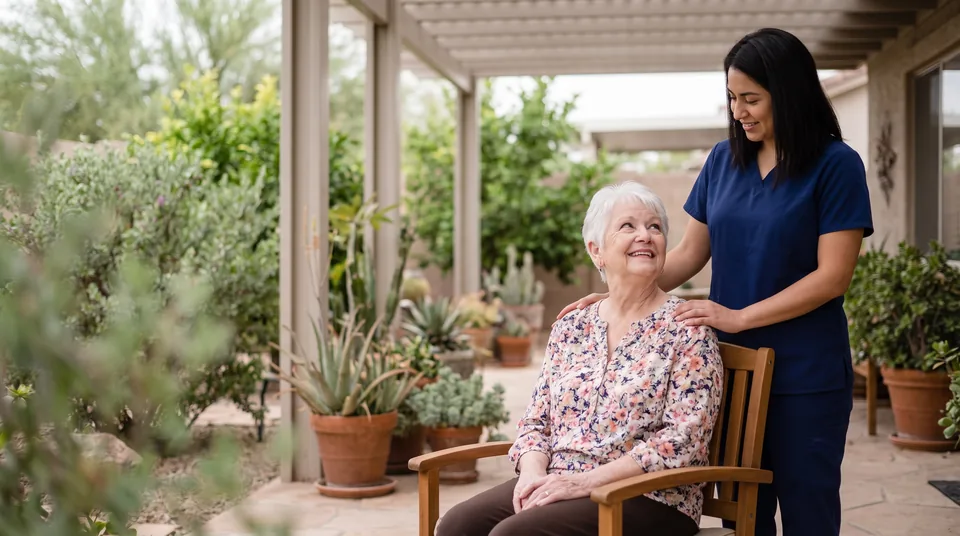
Personal care services are hands-on help with the private, everyday parts of life at home. Meridian Home Care comes to houses in Gilbert and across the East Valley. We help with the things that have gotten hard to do alone. It's for a family member who's slowing down, someone recovering at home after a stroke, or a person living alone who wants to keep it that way.
Personal Care Services Built Around Your Family's Routine
Every house runs on its own routine. The person you care for may shower at night, or first thing after their coffee. They may want the radio on and the blinds open before anything else happens. We ask about those habits up front and work inside them, so the help fits the day instead of taking it over.
A personal care assistant comes at the times that matter most. That might be a morning visit for the shower and getting dressed. It might be an evening visit for supper, a wash-up and help into bed. For a lot of households, personal care starts with a few mornings a week and grows from there. Other families want someone in the house every day. The plan can grow or shrink as needs change.
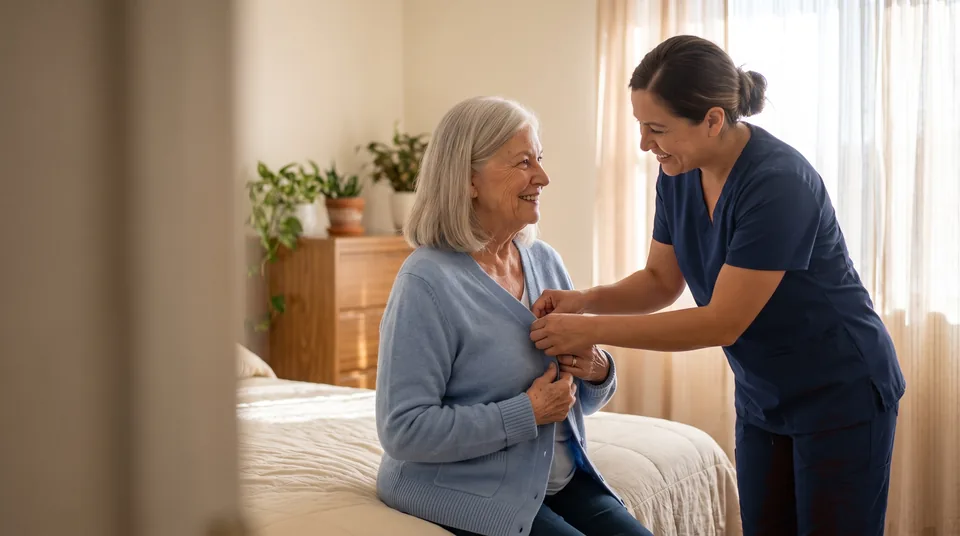
The person getting care stays in charge of the routine. We offer a hand and let them do every part they can still manage. Doing up their own buttons, even slowly, keeps fingers working and keeps the morning theirs.
Personal care is one part of our home care services, and it often sits alongside companion care or help with meals, laundry and housekeeping. We provide personal care in Gilbert and throughout the East Valley, including Mesa, Chandler and Queen Creek. Every town we cover is on our service areas page.
Bathing and Personal Hygiene
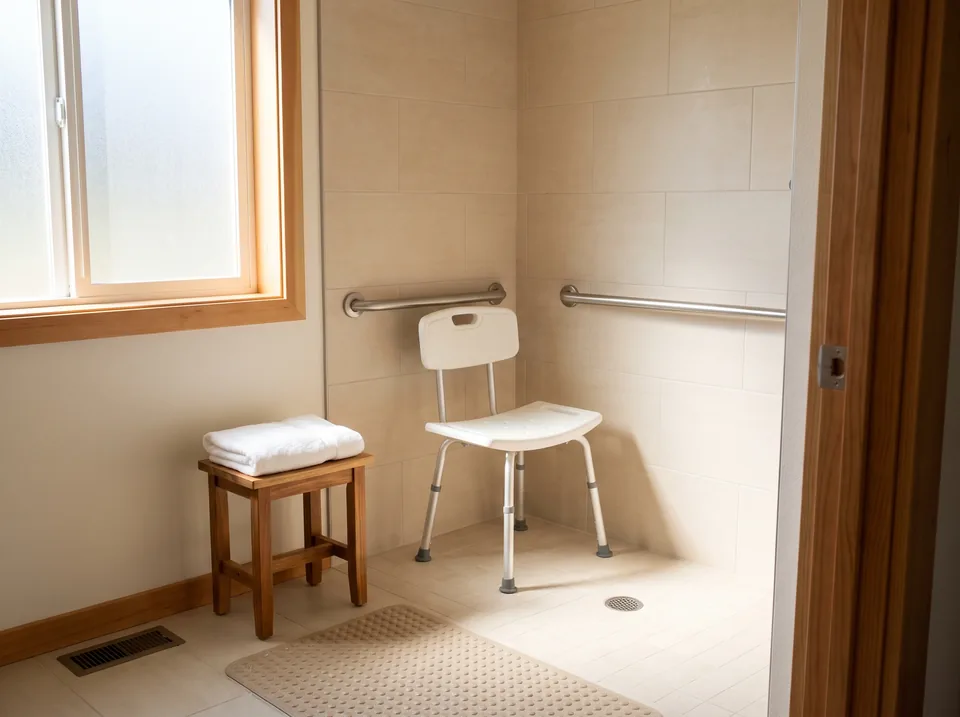
Bathing tends to be the first thing that gets hard, and it's the one people least like to talk about. Wet tile, a high tub wall and a slick shower floor make it risky. Families often start looking for bathing assistance after a close call in the shower.
We get the bathroom ready before anyone steps in. The shower chair goes in place and the water runs warm. Soap, shampoo and a washcloth sit within easy reach. A towel warms in the dryer so the walk out of the shower isn't cold. Your loved one washes what they're comfortable washing, and we help with the rest: their back, their feet, rinsing their hair. A robe goes on as soon as they're out, and we keep them covered wherever we can.
Hygiene goes beyond the shower. It's brushing teeth or soaking dentures, a careful shave, and hair combed the way they like it. Lotion helps skin that dries out in the desert air. Getting dressed in real clothes, with help on buttons, socks and shoes, gives the morning a proper start. On days when a full shower is too much, a warm sponge bath at the sink works fine.
Toileting and Incontinence Care
Help in the bathroom is hard to accept, so we keep it calm and private. It can mean a steady arm to the toilet and back, help with clothing, and a hand to stand up again. It can mean changing briefs, cleaning up gently and putting on fresh clothes, without fuss or comment. At night, it might mean help to a bedside commode so the person you care for doesn't walk to the bathroom in the dark.
Good incontinence care is mostly about timing and supplies. Regular trips to the bathroom through the day help cut down on accidents. We keep wipes, briefs and a waterproof pad on the bed where they're easy to grab. If there's an accident, we change the sheets, start a load of laundry and move on. If we notice redness or a change that worries us, we tell the family so the doctor can take a look.
Mobility and Transfers Around the House
Much of the risk at home sits in ordinary moves: getting out of bed, standing up from the recliner, turning in a narrow bathroom. Transfers are the moves from one spot to another: bed to chair, chair to walker, walker to the car seat before a doctor's appointment. We stand close, count to three together and steady each move, so the person moving isn't doing it alone and off balance.
Getting around matters too. We walk beside your family member on the trip to the mailbox, at their pace, with their walker or cane. In summer, that walk moves to early morning, before the heat climbs past 110 degrees. Inside, we help them between rooms and to the table for meals. If they use a wheelchair, we help them in and out of it and push when they'd like.
Fall prevention is part of every visit. We keep paths clear, park the walker where they'll reach for it, and point out spots where a grab bar would help. How much lifting someone needs is something we talk through before care begins, so the plan matches the person.
Medication Reminders at the Right Time
Missed doses and doubled doses are easy mistakes when someone lives alone. A reminder at the right moment helps. Our medication reminders come at the times the doctor or pharmacy set. We bring a glass of water and let the family know if a dose was skipped or refused.
The medical side stays with the doctor and pharmacist. We don't fill the pill organizer, hand out doses or change anything about a prescription. If the person at home sets out their own pills each week, or you fill the organizer on Sunday nights, we work from that. We can also pick up refills at the pharmacy and put them where they belong.
Safety and Supervision at Home
Some people don't need much hands-on help at all. They need someone in the house. That's supervision: a person nearby while you're at work, so someone you love isn't alone with the stove, the front door or a dizzy spell.
Supervision is mostly small, watchful things. The stove gets turned off. The front door stays locked. The air conditioning stays on in July, and a cold glass of water stays within reach, because staying hydrated matters in the Arizona heat. Night lights go in the hallway and bathroom. A flashlight sits by the bed in case a monsoon storm knocks the power out.
We also notice what's different. A new bruise, an untouched lunch, mail piling up or a confused afternoon can all mean something has changed. We tell the family when we see it. For memory changes, our dementia home care page has more on how we help. For someone who shouldn't be alone after dark, overnight and 24-hour care covers those hours.
What Changes the Cost of Personal Care
The cost of personal care depends on the plan, and the plan depends on the person. Hours per week make the biggest difference. A few morning visits for showers is a very different plan from help every day. Overnight care and live-in care sit at the far end of the range.
How much hands-on help someone needs matters too. Reminders and a steady arm are lighter work than full help in the bathroom and with every transfer. Mixing in errands, meals or laundry during the same visit can change the hours as well.
Every family's week looks different, so we don't post rates. A phone call is where we work it out: what help makes sense, how often, and what it comes to. If you're doing the caregiving yourself and mostly need a break, respite care can be set up around your schedule. If your loved one is coming home from the hospital, post-hospital care covers the first weeks back.
Questions
Frequently Asked Questions
What's the difference between personal care and home health care?
Personal care is non-medical help with daily life, such as bathing, dressing, the bathroom and moving around the house. Home health is medical, like nursing visits, and a doctor usually orders it through a separate agency. Many families use both, and we plan our visits around the other team's.
The person I care for is nervous about help in the shower. How do you handle that?
Slowly, and on their terms. We start with the parts they're comfortable with, keep them covered and talk them through each step. Some people begin with help washing their hair at the kitchen sink and build up from there.
Can a caregiver handle my family member's pills?
We give reminders at the right times and bring a glass of water. We don't fill the pill organizer or decide on doses. That stays with their doctor and pharmacist, and we let the family know if a dose gets missed.
What if my loved one says they don't need help?
That's common. Starting with something they'll accept, like a ride to the store or a hot lunch, can open the door. Help with bathing and dressing can come later, once they're comfortable with the caregiver.
Do you provide personal care in other East Valley towns?
Yes. Along with Gilbert, we provide it in Mesa, Chandler, Queen Creek and Tempe. We also serve the West Valley and set those schedules ahead.
Find the right help
Personal Care at Home Starts With a Conversation
Any hour, any day(602) 200-4819Tell us about the mornings, the evenings and the moments that have gotten hard at home. Call (602) 200-4819, any hour, any day, and we'll talk through what would help.
Step 1 of 2
Who is the care for?